

What Jobs Can You Get After AZ-900? Honest Expectations for 2026
Passing AZ-900 feels like progress. And it is progress. But somewhere between updating your LinkedIn and sending out your first applications, a quiet question surfaces that nobody prepared you for.
What job am I actually applying for now?
The certification does not come with a job title attached. There is no role called "AZ-900 Certified Professional" in any job posting you will ever find. What there is, is a set of roles where the credential matters, opens doors, and changes what you can credibly apply for. Understanding exactly which roles those are, and why, saves a lot of wasted time applying for jobs that are either too senior or completely unrelated to what AZ-900 actually validates.
Here is the honest picture.
What AZ-900 Actually Tells an Employer
Before getting into specific roles, it helps to understand what signal the credential sends to a hiring manager.
AZ-900 says you understand cloud computing at a foundational level. You know what Azure services exist and what they do. You understand governance, cost management, and the shared responsibility model. You can follow a technical cloud conversation without needing things explained from scratch.
What it does not say is that you can administer an Azure environment, configure virtual networks, or troubleshoot production infrastructure. That is AZ-104 territory. AZ-900 is the foundation, not the full structure.
That distinction matters enormously when you are reading job descriptions. Roles that list AZ-900 as a requirement or preference are specifically looking for cloud literacy, not cloud administration experience. The moment a role starts asking for hands-on Azure configuration or deployment experience, AZ-900 alone is no longer sufficient. It might still be relevant on your resume, but it is not the primary qualification the employer is screening for.
The Roles Where AZ-900 Carries Direct Weight
Cloud Support Associate and Junior Cloud Administrator
These are the most direct entry points for AZ-900 holders moving into technical roles. Cloud Support Associates handle tier-one and tier-two support tickets related to cloud resources, help users manage access and permissions, monitor resource health dashboards, and escalate issues that require deeper administrative expertise.
In the United States, AZ-900 holders in entry-level roles earn $70,000 to $90,000, with Cloud Support positions typically sitting between $60,000 and $80,000 depending on location and company size. These roles are where hands-on Azure experience accumulates fastest, which is exactly what makes them valuable as a career starting point rather than a destination.
The competitive reality at this level is that most serious applicants pair AZ-900 with some form of demonstrated hands-on work, whether that is a home lab, completed Azure sandbox exercises, or a personal project they can speak to specifically in an interview. The certification gets your resume noticed. The evidence of applied skill gets you through the interview.
IT Analyst and Cloud Operations Analyst
For candidates coming from a non-technical background, these roles represent the clearest path. IT Analysts at organizations running Azure environments are expected to support cloud migration projects, liaise between technical and business teams, document cloud processes, and help non-technical stakeholders understand what cloud decisions mean for their work.
The AZ-900 certification directly validates the knowledge these roles need. Understanding the shared responsibility model, knowing the difference between IaaS and PaaS and when each applies to a business situation, and being able to read a cloud architecture diagram with comprehension rather than confusion are all skills the exam tests. Salary for IT Analyst roles where cloud literacy is the primary technical requirement sits between $70,000 and $90,000 in the US market.
Technical Sales Engineer and Cloud Sales Representative
This category is consistently underrepresented in conversations about AZ-900 job prospects, and it should not be. Technical sales roles at Microsoft partners, cloud resellers, and Azure-adjacent software companies regularly list AZ-900 as a required or strongly preferred credential.
The reason is straightforward. Sales engineers have technical conversations with prospects and customers about cloud architecture, migration planning, and Azure cost optimization. They do not need to configure the infrastructure themselves, but they need to understand it well enough to hold a credible technical discussion. AZ-900 is exactly the right credential for that scope.
Technical Trainer roles, where AZ-900 holders teach foundational Azure knowledge to individuals and teams adopting the cloud, represent another avenue in this category. Enterprise organizations rolling out Azure frequently need trainers who can explain cloud concepts clearly to non-technical staff, and AZ-900 validates that someone has the foundational knowledge to do that effectively.
Project Coordinator and Technical Project Manager
Cloud migration projects, Azure deployment projects, and digital transformation initiatives require project managers who understand what the technical team is building without necessarily being able to build it themselves. AZ-900 gives project coordinators the vocabulary and conceptual framework to run Azure-adjacent projects competently.
This is not a role where AZ-900 is the primary qualification. Project management experience and credentials like PMP or CAPM carry more weight here. But AZ-900 alongside project management experience creates a meaningfully stronger profile for cloud-adjacent project roles than either credential alone.
Government and Defense Contractor Roles
This is the category that surprises most people and delivers some of the most concrete career value. Federal roles and defense contractor positions frequently list AZ-900 as a preferred or required entry-level certification, sometimes alongside CompTIA A+, Network+, and Security+.
Government IT positions that touch cloud infrastructure use AZ-900 as a screening credential, and many of these roles come with clearance sponsorship for candidates who do not already hold a clearance. A Top Secret or TS/SCI clearance in a cloud-adjacent government role adds $15,000 to $25,000 in annual compensation on top of base salary, which changes the career math significantly for candidates pursuing that path.
The Roles That Look Right But Are Not
There is a category of job posting that creates false expectations for AZ-900 holders, and it is worth naming directly.
Job descriptions that mention AZ-900 as one credential in a longer list of requirements — alongside AZ-104, AZ-500, hands-on Azure experience, and two to three years of cloud administration background — are not entry-level roles accessible with AZ-900 alone. They are mid-level roles where the employer listed AZ-900 because it is the foundational credential in the Azure path, not because it is sufficient qualification for the work.
Reading the full requirement list, not just spotting your certification mentioned somewhere in the posting, saves significant time and frustration in a job search.
The Longer Career Path AZ-900 Opens
The honest conversation about jobs after AZ-900 cannot happen without addressing where this path actually leads, because AZ-900 is more useful as step one of a deliberate sequence than as a standalone credential.
The career path from AZ-900 runs through AZ-104 for administration and architecture roles, with AZ-104 holders in Azure Administrator positions earning $100,000 to $130,000 in the United States, and senior roles like Azure Solutions Architect reaching $127,000 to $190,000 at the top of the range.
Most people who get the best return from AZ-900 are not treating it as the finish line. They are treating it as the credential that got them their first cloud-adjacent role, using that role to build six to twelve months of hands-on Azure experience, and then sitting AZ-104 while that experience is fresh. The combination of AZ-900, real Azure work experience, and AZ-104 is genuinely competitive for mid-level cloud roles. AZ-900 on its own, without the experience that follows, has a lower ceiling.
What the Job Market Actually Looks Like Right Now
As of September 2026, the average hourly pay for Azure 900 roles in the United States is $58.40 according to ZipRecruiter salary data, which translates to approximately $121,000 annually at full-time hours. That figure includes a wide range of experience levels and role types, which is why it looks higher than the entry-level numbers discussed above. The entry-level range for someone coming in with AZ-900 and limited prior IT background is more accurately $60,000 to $80,000 for the roles this credential directly qualifies you for.
Demand for cloud-adjacent roles continues to grow. The Bureau of Labor Statistics projects 29 percent employment growth for information security analysts between 2024 and 2034, and the broader cloud infrastructure and operations category follows a similar trajectory. AZ-900 sits at the entry point of a field with genuine long-term demand, which is worth factoring into the career math.
Frequently Asked Questions
Will AZ-900 help me get a job?
Yes, for specific roles and in specific situations. For non-technical professionals at cloud companies, it signals cloud literacy and gets your resume past initial screening. For career changers, it provides a verifiable credential to point to before you have relevant work history. The roles where it makes the most direct difference are cloud support, IT analyst, technical sales, and government contractor positions.
What jobs can I get with just an AZ-900 certificate?
Cloud Support Associate, Junior Cloud Administrator, IT Analyst, Technical Sales Engineer, Cloud Operations Analyst, and entry-level government IT roles are the most realistic direct targets. Roles requiring hands-on Azure administration experience or Azure-specific engineering skills need AZ-104 or higher.
Is AZ-900 enough to land your first cybersecurity job?
Not directly. AZ-900 covers cloud fundamentals, not security operations. For cybersecurity roles, Security+ or CC ISC2 are more relevant entry credentials. AZ-900 combined with SC-900 or AZ-500 is a stronger profile for cloud security roles specifically.
Do employers actually care about AZ-900 certification?
Many do, particularly for screening entry-level candidates where cloud literacy is the primary technical requirement. It is a checkbox that gets your application past ATS filters for the right roles. Where it carries less weight is in technical roles that primarily evaluate hands-on experience, because the credential signals awareness rather than demonstrated skill.
Will employers hire me with only AZ-900?
For entry-level and cloud-adjacent roles, yes. For cloud engineering roles that require hands-on Azure experience, AZ-900 alone is not sufficient. The candidates who convert applications into offers most consistently pair the credential with demonstrated applied skills, whether that is a documented home lab, completed Azure sandbox exercises, or a project portfolio they can discuss in interviews.
Is AZ-900 good for career changers?
Yes, specifically because it requires no prior IT experience to earn and validates knowledge that is directly relevant to cloud-adjacent roles. The key context is that it is a starting point, not a job offer. Career changers who combine AZ-900 with hands-on project work and active networking get to employed status faster than those who treat passing the exam as the final step.
How much can you make in cybersecurity with AZ-900?
AZ-900 is not a cybersecurity credential, so this question is slightly misaligned. For cloud-adjacent roles, entry-level AZ-900 holders earn $60,000 to $80,000. For cloud security roles specifically, pairing AZ-900 with AZ-500 or Security+ creates a more relevant profile, and those combinations can reach $85,000 to $103,000 at entry level according to Salary.com data.
What should I take after AZ-900?
AZ-104 is the most common next step for anyone heading toward cloud administration or architecture. It is where the job market starts responding meaningfully to your credential and where compensation increases substantially. For non-technical professionals staying in their current function, MS-900 or SC-900 may be more relevant next steps depending on your role. For a [complete overview of what AZ-900 covers](https://certsinfinity.com/blog/az-900-
microsoft-azure-fundamentals-what-it-
actually-is-and-whether-you-should-take-it) and who it is designed for, the full breakdown is here.
The Bottom Line
AZ-900 opens specific doors. Knowing which doors those are before you start applying saves time, sets the right expectations, and makes the job search significantly more targeted.
Entry-level cloud support and IT analyst roles are the most direct targets. Technical sales and government IT positions are underexplored and worth pursuing seriously. Project coordination roles benefit from the credential when combined with project management experience. And all of these roles are most effectively pursued when AZ-900 sits alongside something that demonstrates applied skill, not just certification.
The certification is the starting line. What you do in the months after passing it determines where you end up.
For AZ-900 practice questions updated to the current exam blueprint, including the January 2026 additions: certsinfinity.com
Related Articles
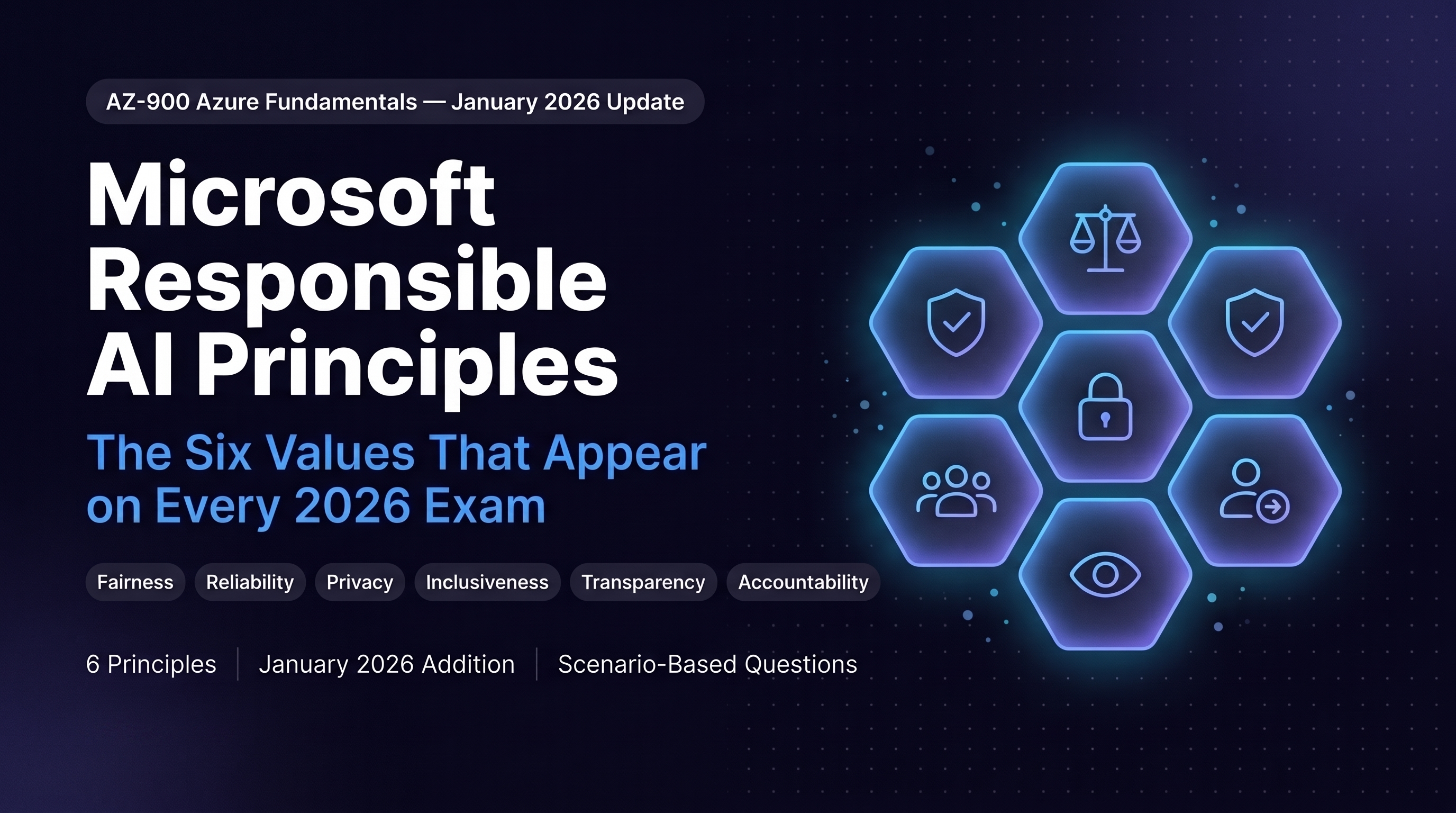
The Responsible AI Principles Question That Tricks Almost Everyone
You're three weeks into studying for AZ-900. You feel good. Cloud concepts make ...
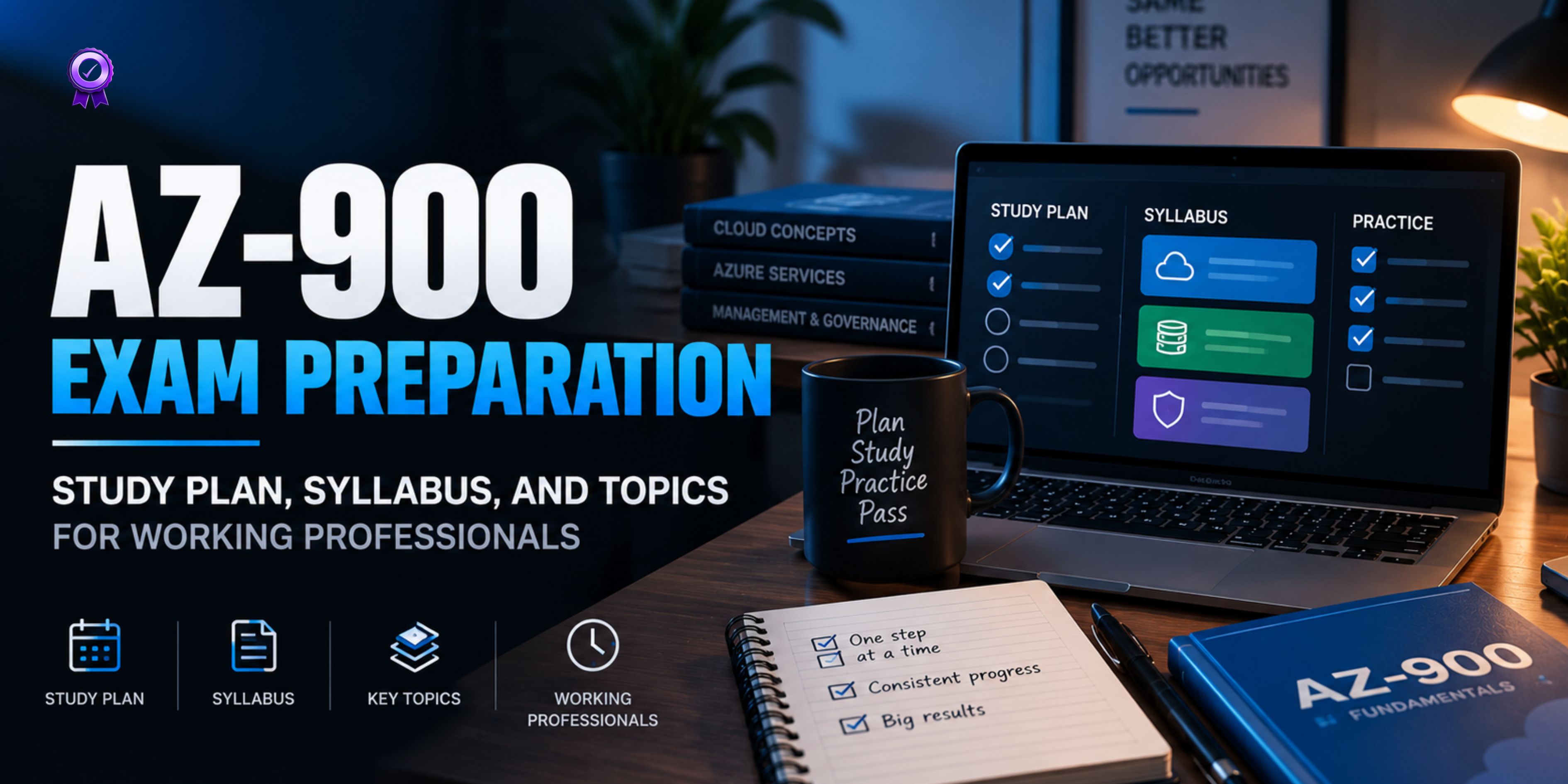
AZ-900 Exam Preparation: Study Plan, Syllabus, and Topics for Working Professionals
Here is the situation most people are in when they decide to pursue AZ-900. They...

Will AZ-900 Actually Increase Your Salary? The Honest Numbers Nobody Gives You
This is the question that sits at the back of every AZ-900 decision. The study g...